
A young child sitting through a Buddhist wake for the first time may ask questions no parent feels fully ready to answer. Deciding whether to bring a child to a Buddhist funeral in Singapore, and how to prepare them for chanting, incense, and a room full of grieving adults, is a real and common dilemma for families facing a loss.
Most young children can attend a Buddhist funeral if a parent prepares them beforehand and builds in the option to leave if the experience becomes too much. There is no fixed age that determines readiness; a calm four-year-old with a close bond to the deceased may manage better than an anxious eight-year-old attending for a distant relative. Attendance works best as a flexible decision, not a fixed rule, shaped by the child’s temperament and their relationship to the person who died.
Buddhist funeral customs in Singapore vary between dialect groups and families, so no two wakes look identical. Some parents will see monks chanting for extended periods; others will see a simpler, quieter service. Knowing what to expect, and having honest words ready for a child’s questions, makes the day easier to manage for everyone in the room.
Should Your Child Attend, and How Can You Prepare Them?
A child’s readiness depends on age, temperament, and how directly the death has touched their life, more than any general rule about whether children should go to funerals. Preparation matters as much as the decision itself: a child who knows roughly what to expect handles the room far better than one who walks in blind.
How Do You Decide Whether Your Child Is Ready?
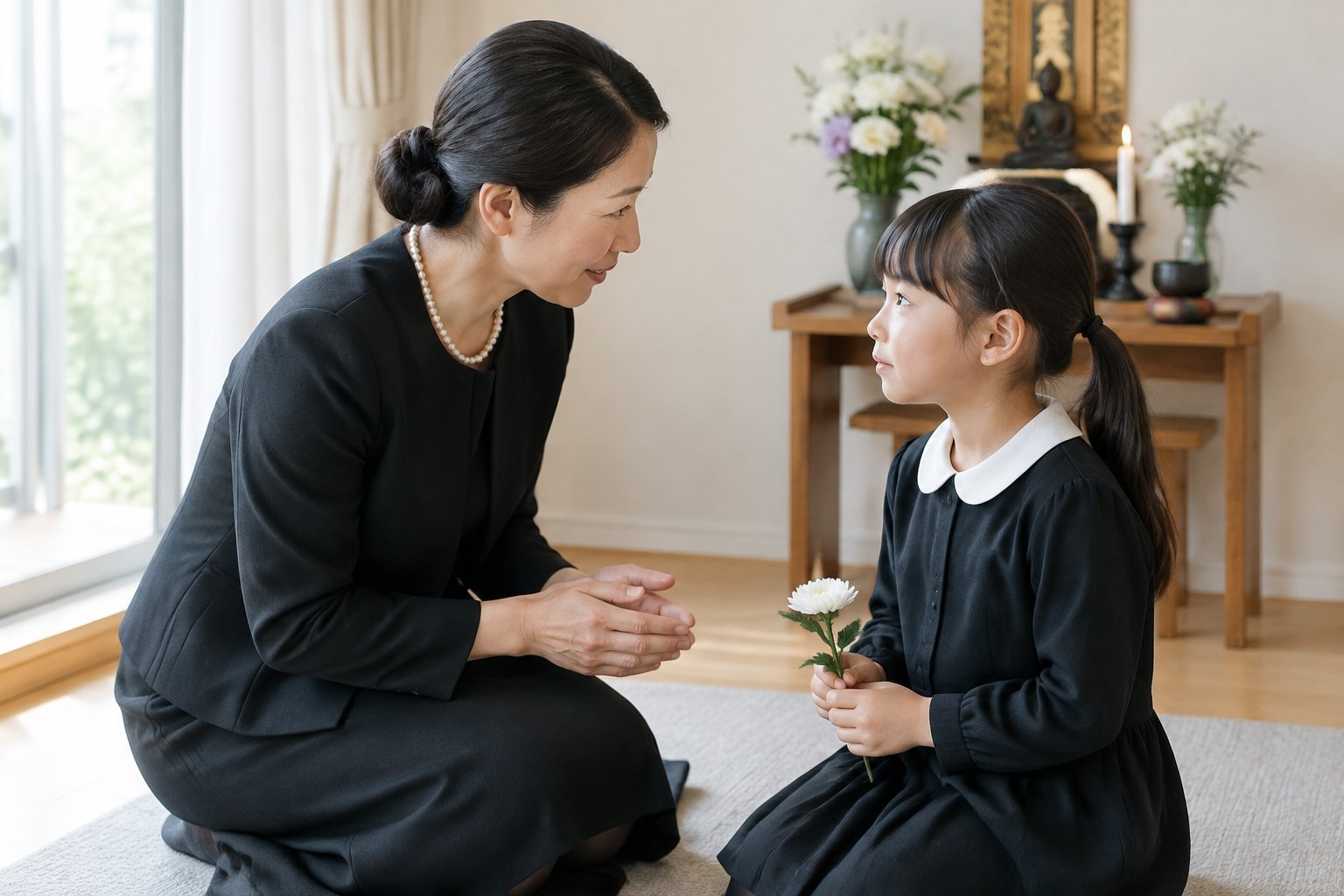
Look at the child in front of you, not a general age guideline. A sensitive child who startles at loud noises may struggle with chanting and gongs, while a curious, steady child might find the ritual grounding rather than frightening.
Consider these factors together:
- How close was the child to the person who died?
- Has the child previously handled changes in routine or unfamiliar settings well?
- Can the child sit, stand, and wait quietly for stretches of time, even with breaks?
- Does the child already understand, in basic terms, that the person has died?
A child who has never met the deceased rarely needs to attend the full wake. A short visit to pay respects, or staying home with another caregiver, is a reasonable choice.
How Do You Explain Death and the Funeral to a Young Child?
Use plain, concrete words instead of euphemisms like “gone to sleep” or “went away,” which can confuse a young child and even trigger fear of sleep or travel. Say that the person’s body stopped working and will not start again, and that everyone is sad because they miss them.
Explain the funeral itself in simple terms: people will gather to remember the person, some adults will cry, there may be chanting or praying, and there might be a casket in the room. Telling a child in advance what they will hear and see reduces the shock of walking in.
Invite questions and answer them honestly, even if the honest answer is “I don’t know.” Children often ask the same question more than once as they process it, which is normal rather than a sign something is wrong.
What Should You Ask the Family About the Buddhist Service?
Ask the bereaved family directly about the order of events, since Buddhist funeral arrangements differ by dialect group, temple, and personal preference. A short conversation beforehand prevents surprises for both the parent and the child.
Useful questions include:
- What time will monks be chanting, and how long does it typically last?
- Will incense be offered by guests, or only by family members?
- Is there a viewing of the body, and is it open or closed casket?
- Is there a quieter space nearby where a child can rest if needed?
Parents arranging a funeral themselves, or supporting a grieving relative through the process, can find structured guidance through Harmony Funeral Care’s Buddhist funeral arrangements in Singapore, which covers how wake and chanting schedules are typically organised.
What Helps Children During and After the Funeral?
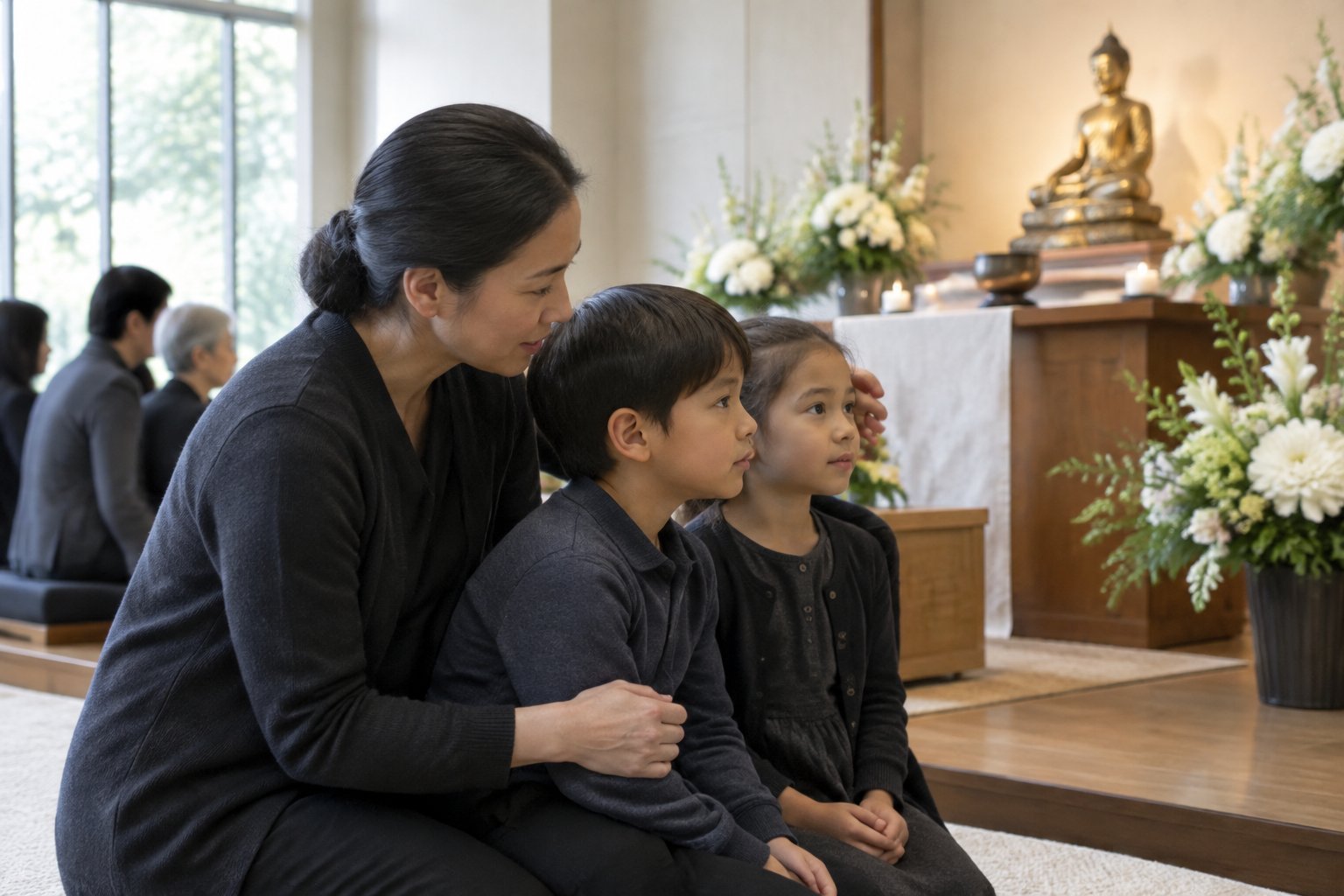
A child copes best with a Buddhist funeral when a parent stays close, explains what is happening in the moment, and allows the child to step back from rituals without pressure. Support during the service and conversation afterward both shape how the experience fits into the child’s grieving process.

What Might Your Child See and Hear at a Buddhist Funeral?
A child may encounter monks chanting sutras, the sound of wooden fish or bells, and the smell of incense burning near an altar. Family members might wear plain, dark clothing or white, and some will wail or cry openly as part of mourning customs.
There may be a photograph of the deceased on display, paper offerings, and a casket that is open or closed depending on the family’s wishes. None of these practices are universal; some Buddhist families in Singapore hold longer chanting sessions over several nights, while others keep the wake brief.
How Can Your Child Take Part Without Feeling Pressured?
A child can take part in small, optional ways rather than being expected to follow every ritual. Offering a simple choice keeps the child from feeling cornered by unfamiliar customs.
Options worth offering:
- Placing a flower or small item near the altar
- Standing beside a parent during bowing, without being told to bow
- Lighting incense only if the child wants to and an adult guides their hand
- Drawing a picture or writing a short note instead of taking part in rituals directly
A child who declines to bow or offer incense has not failed at anything. Standing quietly beside a parent is a complete way to participate.
What Is Your Plan for Breaks or a Change of Mind?
Plan an exit before the service starts, including a signal the child can use if they want to leave. Scout a quiet corner, corridor, or the car as a retreat spot, and let a second adult know they may need to step out with the child at short notice.
Bring a small bag with water, a snack, and a quiet toy or book. A child who knows a break is always available tends to settle faster into the parts of the service they can handle.
How Can You Talk About Their Feelings Afterwards?
Ask open, simple questions once the service ends, rather than asking whether the child enjoyed it. “What did you notice?” or “What felt strange today?” invites a more honest answer than a yes-or-no question.
Watch for delayed reactions over the following days or weeks, such as changes in sleep, clinginess, or repeated questions about death. These are common parts of a child’s grieving process and usually settle with patience and consistent, honest answers.
Conclusion
Bringing a young child to a Buddhist funeral in Singapore works best as a considered decision rather than an automatic one. Weighing the child’s temperament, their closeness to the deceased, and the specific customs the family plans to follow gives a parent a clearer sense of what the day will involve.
Preparation beforehand, honest language about death, and a plan for breaks or a quiet exit carry more weight than any single rule about attendance. A child who feels informed and never forced tends to manage the day better, whatever they choose to take part in.
Frequently Asked Questions
Can a toddler attend a Buddhist funeral?
A toddler can attend briefly, though long chanting sessions and crowded wakes often exceed what a toddler can sit through comfortably. Many parents bring a toddler for a short visit to pay respects, then leave with another caregiver before the longer rituals begin.
Does my child have to bow or offer incense?
No, bowing or offering incense is optional for a young child, and standing quietly beside a parent is an acceptable way to show respect. Some children choose to bow once they see adults around them doing it, while others prefer to watch without joining in.
What should my child wear to a Buddhist funeral?
Plain, modest, and subdued clothing is appropriate; dark colors or white are common choices depending on the family’s customs. Checking with the bereaved family beforehand helps, since expectations around color and dress can differ between dialect groups.
How do I prepare my child to see an open casket?
Tell the child in advance that the body will look still and will not move, speak, or wake up, using direct language rather than euphemisms. Offer the choice to look or not, and stand close by so the child can step away immediately if they feel overwhelmed.
What if my child does not want to attend?
Respecting a child’s wish not to attend is a reasonable choice, and there are other ways for a child to say goodbye. Drawing a picture, writing a note, or visiting the family at a quieter time afterward lets a child acknowledge the loss without attending the full service.